Tuesday, April 23, 2013

To Learn. To Be Inspired.

Costales Nature Farms, Majayjay, Laguna.
Gardening will always be a part of my life.  I was lucky to join a group of farmers from the Cordillera Region (uplands in Northern Luzon, Philippines) in a visit to model farms last April 16 to 20, 2013.  It was quite a long journey but it was worth it.  Our group's first stop was at Kahariam Farms in Lipa City, Batangas.  Secluded a few kilometers away from the city, the rough road opens up to a sixteen hectare farm with its signature gazebo.  Kahariam Farms boasts of the only farm in South East Asia to be a certified producer of organic rice seeds.  Kahariam Farms had difficulties in marketing its organically grown vegetables but eventually found gold in producing vermi (earthworm derived) fertilizer.  The former horse stable now produces two hundred tons a month of organic fertilizer certified by the Fertilizer and Pesticide Authority, from composting worms.  Several greenhouses and even under Mango trees are stocked with composting worms.  Kahariam Farms also produces vegetables, free range chicken, colored Tilapia and provides training programs to farmers.  Costales Nature Farms in cool
Engr. Ronald Costales and author.
Majayjay, Laguna was our next day visit.  Engineer Ronaled Costales introduced his company as we gathered in a thatched roof -one story conference hall.  He left a telecom company as an executive vice president at age 39 and started Costales Nature Farms.  Ronald never knew anything about farming but got himself prepared by attending seminars here and abroad.  Today, the farm produces eight to ten tons of various vegetables each month.  Costales Nature Farms has won accolades- the owner was adjudged 2012 Most Outstanding Organic Farmer of the Philippines and earned its organic certification.  Last stop is Duran Farm, owned by Daisy Duran of San Ildefonso, Bulacan.  Daisy, a housewife was always enterprising.  She sold fish balls in her home which was near a school.  She attended a seminar in vegetable production and converted her backyard into a vegetable plot.  She got the surprise of her life when she earned seventy thousand pesos from her first vegetable growing venture.  She never looked back since.  She found her niche in seedling production, earning her the title "Seedling Queen" in several magazine articles written about her.  She has then taught her neighbors how to do seedling production, virtually turning San Ildefonso, Bulacan as the vegetable
Costales Farms.
capital of Bulacan.  Daisy's life and her neighbors have changed for the better.  She waxed sentimental as she told us her story, became emotional, quickly recovering with a laugh.  Ever so humble, Daisy picked up her megaphone and led us on a tour of her farm, demonstrated how to propagate seeds.  All three model farms were using vermi composting as source of fertilizer and reminded us of taking care of the soil.  To the rest of us, we went home inspired, vowing to implement a sustainable way to raise food and help contribute to a cleaner, healthier environment.

Sunday, April 7, 2013

Signs of A Blessed Season

When the rains come starting in the month of May, it brings joy to the farmer.  This month of April, the last rain that we had came with hailstones. Old folks say that when there are hailstones, it is a sign that rain will no longer come for so many days.  And so it is, not a drop of rain and the surroundings are so dry.  And so, I post these pictures to help remind me that this is only a temporary thing.  Pretty soon, the plants will again be nourished by the rains.


Monday, February 4, 2013

The Harvest

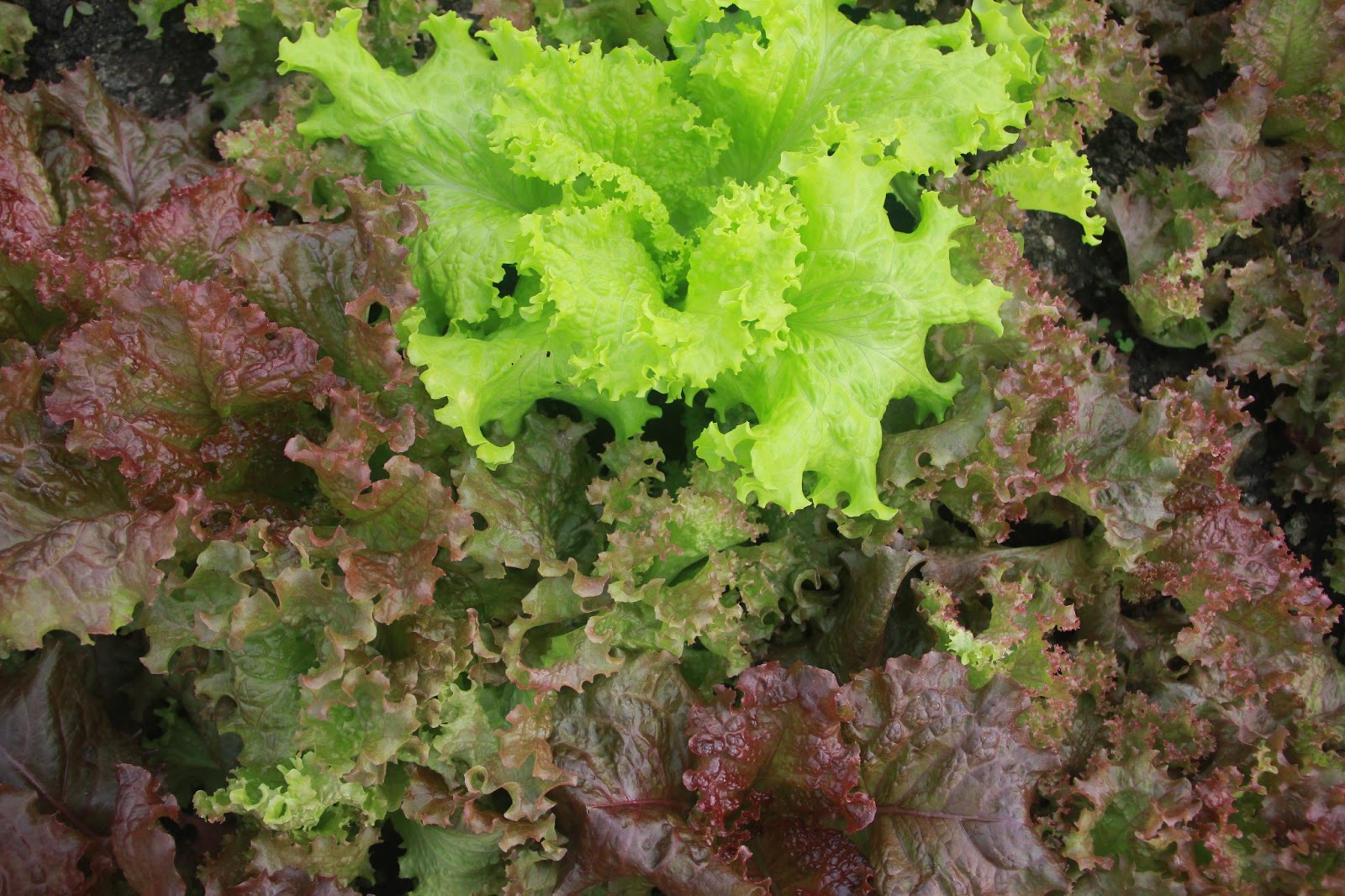
Harvesting vegetables, you worked hard to grow is bliss.  Today, I gather lettuce to sell at the Bontoc Market.


Rain Shelter Program

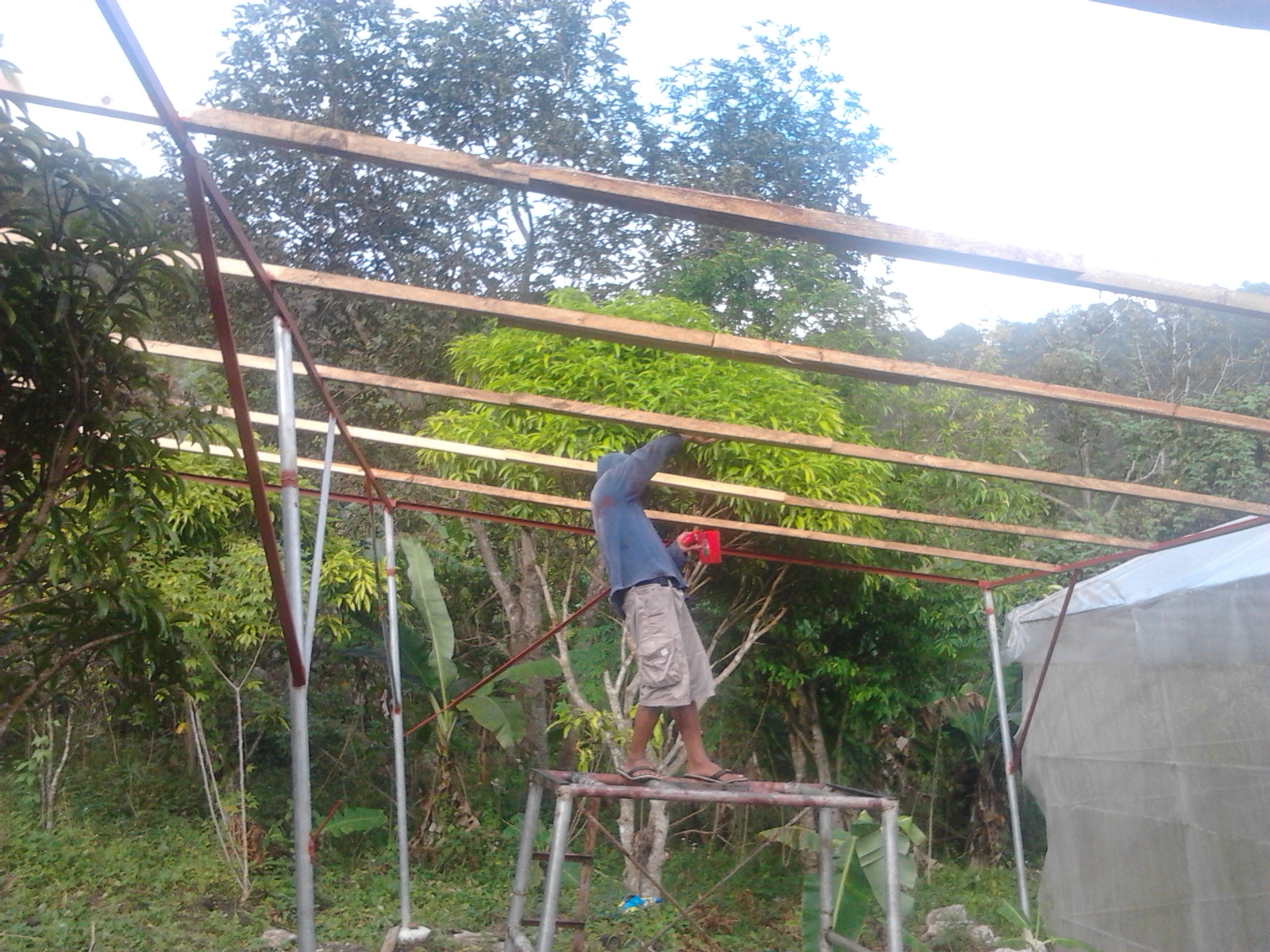
Last year, The Gardener has been a recipient of the Rain Shelter Program of the Department of Agriculture.  The rain shelter veers away from the Green House concept and allows for a more insect visitations in the garden plots.  This encourages pollination-good for the vegetables and the insects.


Friday, March 9, 2012

Internet Farmer


I’m turning a new leaf in my life as I bade goodbye to my coleagues at the Department of Trade and Industry.  I clocked out on February 29, my last working day as one by one, my workmates for the past twenty years said their piece about how I was, who I was, what I was as a co-worker.  Yes a program was planned in my honor.   Oh, wow, after listening to what my workmates have to say about me, it seems, I already heard what people close to me are going to say in the future as I lie on my coffin.  To cap it off, I was awarded with a plaque- “Highest Performing Employee” of the Department of Trade and Industry- Cordillera Region.  I bowed out with honors-having led a team to work on a rapid economic survey on what ails and holds off the economic growth of my hometown, Bontoc.  The results will be seen in a few year’s time but it will need the full cooperation of the community.  The project has yet to be fully implemented in other towns and cities nationwide. 

Well, these things that we found out could be discussed in the future as I want to take it easy before realizing that I am now one of the “unemployed.” Ha, ha.

I resigned my day job because I wanted to do a lot of things, things I could not do if I am tied up with a fixed schedule.  Xijen College of Mountain Province, Inc.  which I founded in 1992 is in good hands, under the capable care of Dr. Edarlina A. Fakat and a smart, dedicated staff. 

This February I finally had my trainer’s training on natural farming in barrio Tugbok, Davao City.  Andre Lim, scion of a prominent family in Davao was our trainer.  A natural farming practicioner who trained with Korean natural farming advocate, Master Cho, Mr. Lim, in his booming voice carried out the training with so much passion.  His advocacy on the use of natural inputs to farming carried something beyond just practicing natural farming.  It was farming that carried with it a spiritual side.  It is farming that doesn’t destroy the earth, it is farming that respects the one Who created it all.  On our last day, I told my story.  I was a weekend farmer and an Internet farmer.  We all laughed because we had one thing in common, we spent endless online researches on the topic of natural farming.  My Davao experience solidified what I have been doing for some years now.  Still there were some things, processes that are unwritten online or in hard copies.  I had my ups and downs in natural farming but as always, I could find some help online.  Our group of trainees was a gathering of people from all walks of life.  One, a mechanical engineer, who spent most of his life working on his family’s trucking business was suddenly thrust to take care of a piggery business his father left behind.  He wanted to shift to natural farming on raising pigs considering that the profit margin for convential swine fattening had severly decreased.  A young couple, the husband, a seaman wanted to do farming- “kasi ang hirap ng trabaho sa barko…” a retired nurse married to a British national was a veteran farmer too, but she wanted to confirm if her farming practices were right;  an engineer with an oil company in Nigeria wanted to work full time in his Davao farm with the help of his lawyer wife- who trained with Mr. Lim a month earler.  Two young people, one a landscaper and another an agricultural graduate who focused on ornamental plants were just as enthusiastic on natural farming.  One mother,  pitched in for his son, a young man of 22 who already was into natural pig raising. His natural farming practices was his town’s showcase as it was near a school (Polomoc, Cotabato) and yet  it did not have the odor, most pig pens here in Bontoc, have.  We were a noisy bunch, sharing all of our experiences and eventually became close to each other so that a social network account is planned and eventually a reunion set after a year, with Cebu as the first gathering.  Another was an OFW who wanted to start pig raising, and one, a former government executive who is now active in advocating natural farming to her provincemates in Sorsogon.
Indeed, information on a particular interest can be had on the World Wide Web.  If something, becomes your passion, you can quickly learn by doing keyword searches about what interests you.  This is something, I want the young generation to use to the fullest.  You can also join a group where you can share your passion.  In time, you can learn from each other, you discover that people on the other side of your “fence” can offer as much help as you can get, often times for free.  Indeed the online information explosion has contributed to a better planet.  I thus continue to learn the ways of natural farming  online and of course with much time now in my hands, I’m out in the sun in communion with nature.  

Tuesday, March 6, 2012

Experimentation with Coco Peat

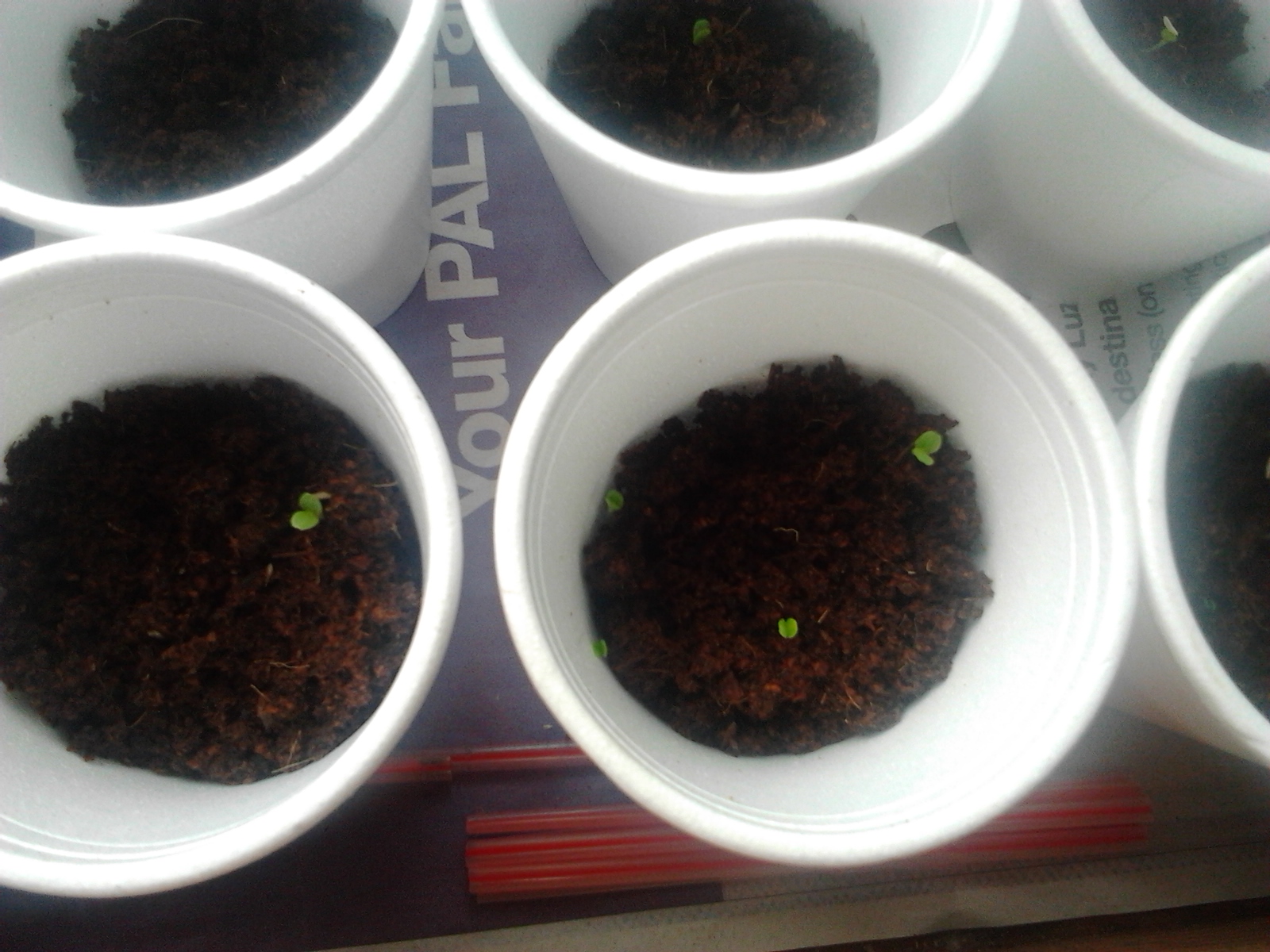
I got 3 blocks of packed coco peat for experimentation purposes.  Basically, this is to find out if coco peat is indeed an ideal medium to grow seeds.  I brought it home and got my youngest son to watch as the dried coco peat expanded while we soaked the material in water.  In a few minutes, the coco peat becomes a gooey brown material ready for the seedling trays.  I used Styrofoam cups.  I also had the lettuce seeds pre-soaked in water and left to air dry in newspaper.


I lined a wooden box with newspaper and scooped wet coco peat.  This will serve as one of my seedling tray.   The cups were also half filled with the coco peat and slowly, father and son dropped a few seeds here and there.

I told my son that in a few days, tiny leaves could be seen.  My son's eyes widened as he said, he'd wake up everyday to check on the seed boxes.


In two days, tiny seeds sprouted from the coco peat material.  I sprayed diluted Effective Microorganisms.  This is the last time I am using a locally made commercial EM concentrate.  I plan to use locally sourced indigenous microorganism.


I put the Styrofoam and wooden box seed trays in a sunny window.  I have to cover with glass (taken down from our old windows to control the full sun which hit the window some long hours each day.


The seeds indeed grew but they were quite not ideal for transplanting.  I did found out in the end that the coco peat did not have much nutrients. The trick was to mix in the coco peat with good garden soil.  The soil will then provide the nutrients.  The coco peat though is an ideal material for seeding because it is porous-allows the roots to breathe.


Coco peat is an ideal material for seed preparation but it is not readily available in our mountain region.  One can make arrangements with the market vendors so that you can get their coconut wastes.  Wet the husks and have it decompose in a few months.

Meanwhile, you can still do seeding in a well prepared garden plot (compost added).


Sunday, January 23, 2011

Best Shared With Family and Friends

Genuine appreciation for the fruits of the gardener's labor warms the heart.  Days and hours spent on tending the garden and finally gathering grown vegetables is something worth awaiting.  Even more, a visit from friends gives an opportune time to gather vegetables, herbs and join in the fun of preparation for a "feast."  Instead of eating inside the house, we brought out the table, while Russel, our Canadian guest prepared the dressing for the lettuce.  Russel made do with honey (wild), a bit of red wine, onions, cider vinegar of the bignay fruit.  I checked the kitchen cupboard-well it yielded no olive oil.  I then did the washing of the lettuce and pechay leaves, leave it for a while to dry.  Our main course was relyenong bangus (stuffed milk fish) which my cousin John prepared earlier.  Earlier, Russel was excited to see parsley in the greenhouse. He took a few leaves and off it went straight into his mouth. Russel claimed it was the best parsley he ever tasted.  It had a mild flavor.

Clifford and Russel sit for an outdoor meal we all enjoyed.


Even the kids enjoyed the greens.  They are finicky eaters and I was still happy even if the young man only took a leaf from the green salad.


David and Clifford who set up the composting shed learned a thing or two about adding some color to a table setting- banana leaves complement our lunch. Hmmm, can't wait to start lunch.  We joked about opening the garden to the public and start accepting visitors.  We joked about Russel being our first "test"guest.


Russel introduced papaya to the lettuce salad.  Now that's another thing new that I have learned.


Indeed, later in the afternoon, the gardener welcomes Joy and friends-dropping by for a visit.  No sweat, Clifford and David served Lemon Grass Tea, I did the lettuce salad which the guests picked from the plots and quickly did a repeat of Russel's brand of dressing.  Now instead of going up to Maligcong, we went up the mountain to have a view of Bontoc- only a few meters up from the garden.


And so here is the view that completes a visit to our garden.